
What to Look for at a Wedding Venue Open Evening: A Couple’s Checklist
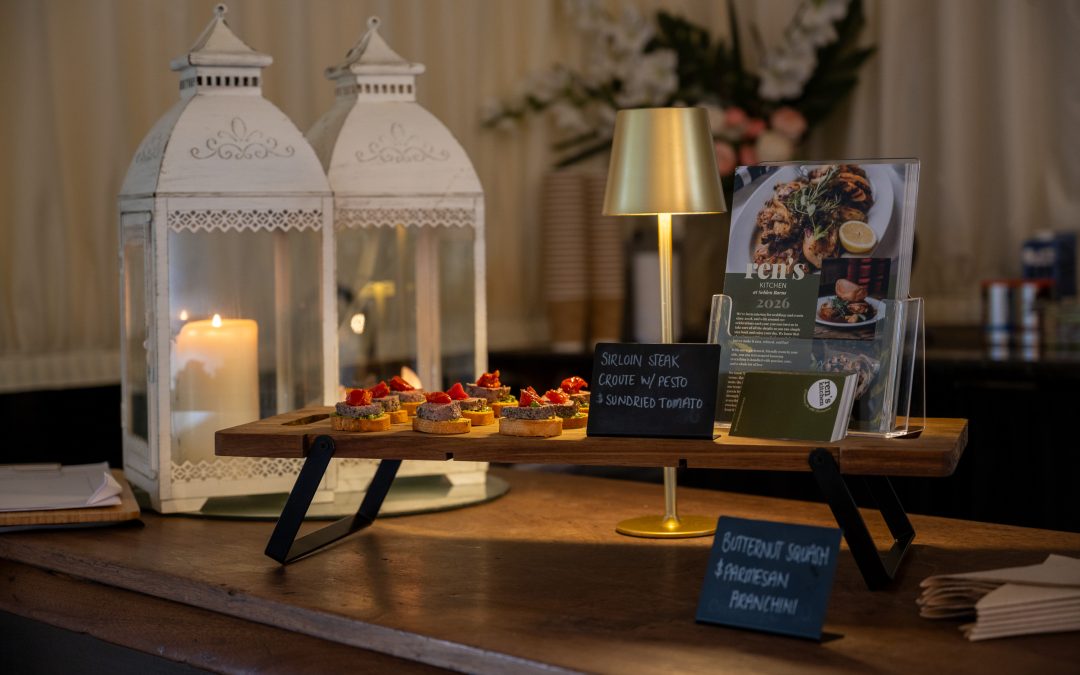
Open evenings are the best way to see a wedding venue — better than a brochure, better than a website, and arguably better than a private tour. The barn is dressed, the lights are on, suppliers are often setting up, and you get to feel what the venue is actually like as a wedding rather than as an empty room with the photographer’s flattering angles.
But couples often walk in, fall in love with the fairy lights, and walk out without having looked at any of the things that genuinely matter. Two weeks later they’re sat at home trying to remember whether the toilets were inside or outside, whether there was a wet-weather option, and whether the venue actually had accommodation or just said something about “guest cottages nearby.”
Here’s a checklist for getting the most from an open evening — what to look for, what to ask, and what to pay attention to that almost nobody does.
Before You Go
A bit of prep makes the visit ten times more useful.
Decide who’s coming. Open evenings welcome you to bring your wedding party — parents, your maid of honour, the friend who’s done three weddings of her own. Bring the people whose opinions you actually trust. Don’t bring everyone — six people pulling you in six directions in a barn is overwhelming.
Have a rough guest number in mind. “Around 80” or “we’re thinking 120” is enough. It changes which spaces feel right and which feel cavernous or cramped.
Have a rough season in mind. Summer outdoor ceremony, winter cosy candlelit, spring lawn drinks reception — even a vague preference helps you imagine the venue at the right time of year.
Make a shortlist of questions. Two or three things that genuinely matter to you. Dog-friendly? On-site accommodation? Late licence? Catering flexibility? Write them down so you don’t forget to ask while you’re swept up in the atmosphere.
What to Look at the Moment You Arrive
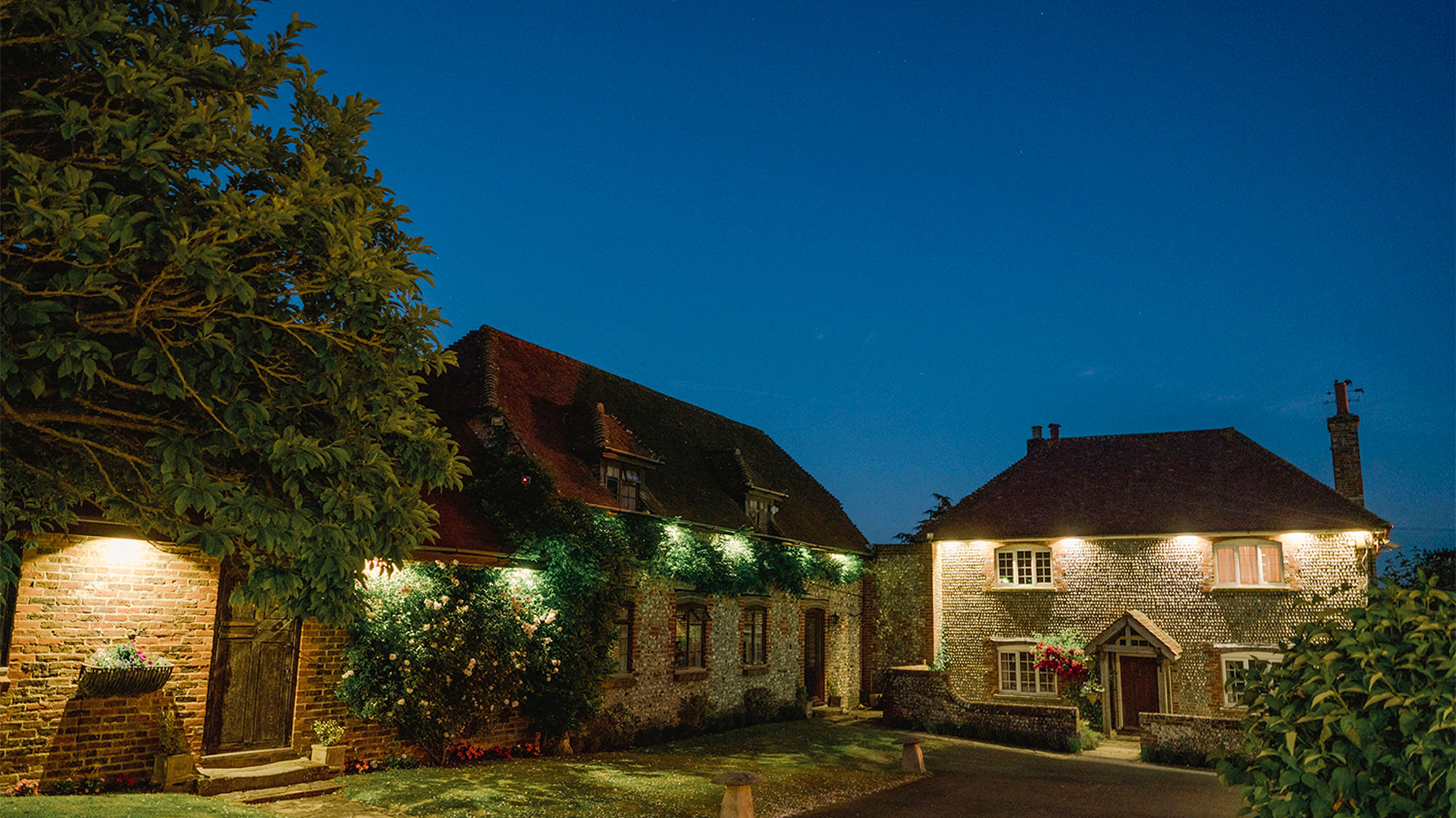
The drive in matters more than people think. This is the first thing your guests will see, and it sets the tone before anyone steps out of the car.
Notice:
- The approach. Is it a long, scenic arrival or a turn off a main road? Easy to find with sat nav?
- Parking. Is there enough for 60–80 cars? Where will guests park if it rains?
- The first view of the venue. This is the photo every wedding photographer will take. Does it make you feel something?
- Sound. Stand still and listen. Traffic noise, livestock, an A-road in the distance — once you’ve heard it you can’t unhear it.
The Ceremony Spaces
Most venues have one. Some have several. Ask to see all of them.
For each ceremony space, look at:
- Capacity. Will your guest count fit comfortably, or are you squeezing in?
- Wet-weather backup. If the outdoor ceremony is rained off, where do you go? Is the alternative as nice, or an obvious downgrade?
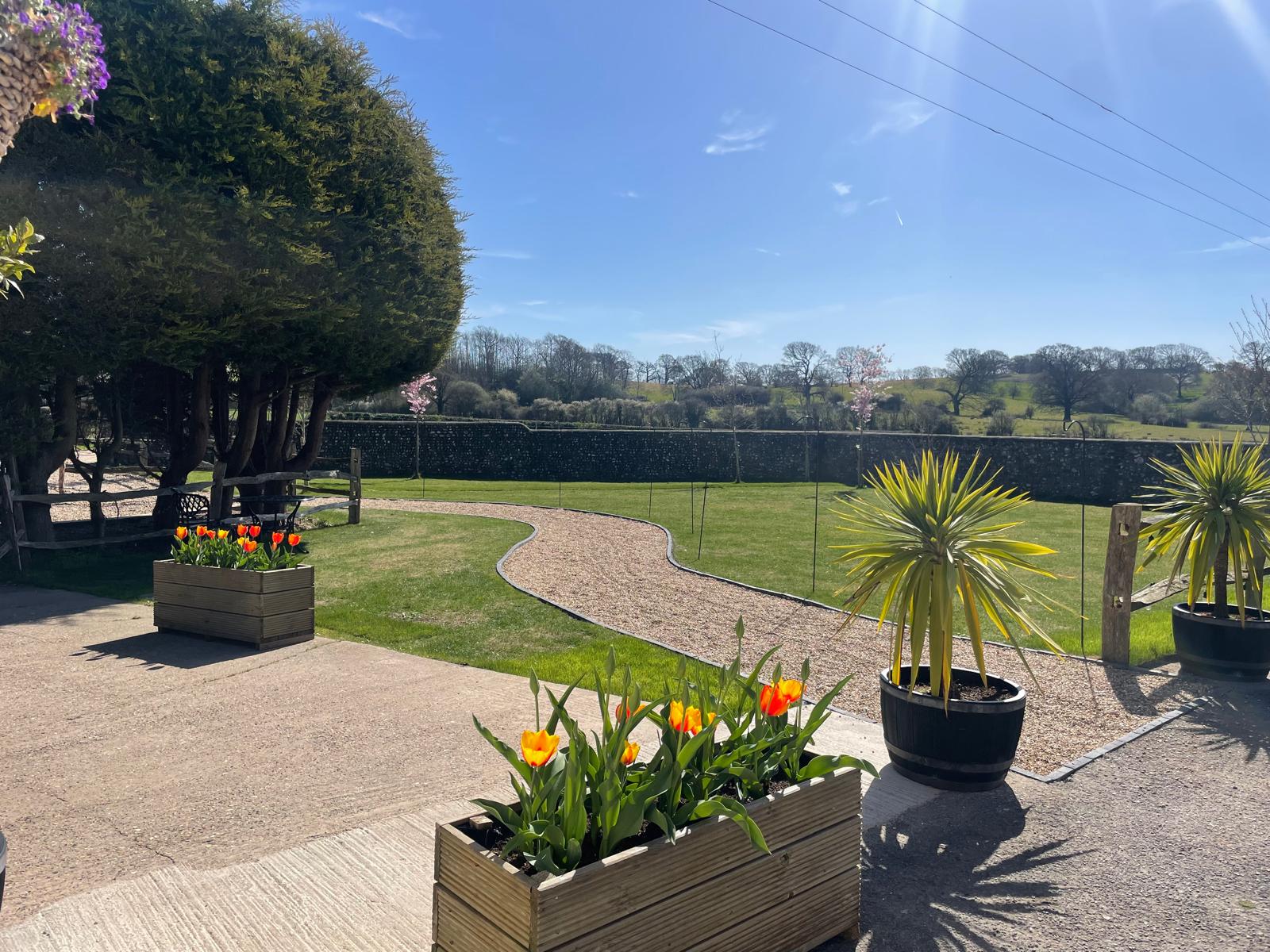
- The aisle. How long is it? What’s underfoot — grass, paving, a runner? What’s the backdrop?
- The acoustics. Indoor ceremony rooms vary wildly. Soft furnishings absorb sound; bare stone bounces it.
- Where guests sit. Bench seating, chairs, a mix? Comfortable enough for 30 minutes?
A venue with genuine ceremony options — say, an outdoor lawn, a covered pergola, and an indoor barn — gives you a Plan A, B and C without compromise. A venue with one ceremony spot and “we can do something inside if it rains” is a different proposition.
The Reception Space — The Real Test
This is where your guests will spend the bulk of the day. Look harder here than anywhere else.
Walk into the main reception space and ask yourself:
- Can I picture the wedding breakfast laid out here? With round tables of ten, your guest count, a top table at the end — does it work?
- Where does dancing happen? In the same room, a separate room, on a built-in dance floor, on a temporary one laid over the dining floor?
- Where is the bar? If it’s in another room, your evening will fragment. Guests gravitate to bars and stay there. (We’ve written about why keeping everything in one barn matters if you want the longer take.)
- What happens between dinner and dancing? If the band has to set up while staff clear tables, there’s a dead half-hour. Some venues build that into the timeline beautifully. Others lose the energy of the room.
- Heating, ventilation, light. Is the room warm in winter, ventilated in summer? Can the lighting be dimmed for the evening? Are there blackout options?
Stand in the centre of the room and turn a full 360. Picture every part of your day happening in that space. If anything feels wrong, ask about it now.
The Bits Couples Forget to Look At
Here’s where most open-evening visits fall down — couples look at the pretty parts and miss the practical ones. These are the things you’ll regret not checking.
Toilets. How many? How close to the reception? Inside or in a separate block? Are they accessible? Is there a baby-change?
The kitchen. You’re not going to be cooking, but caterers are. Is there a proper prep kitchen, a hot pass, fridges, plate-warming? Caterers will tell you that good kitchen facilities make or break the food on the night.
The getting-ready space. Where do the bridal party get ready in the morning? Decent natural light for photographs? Mirrors, plug sockets, somewhere to hang dresses?
Accommodation. On-site cottages? Off-site nearby? Is there enough room for immediate family, or will half the wedding party be driving 20 minutes back to a hotel? Where do the couple sleep the night before and the night of the wedding?
Power. This sounds boring, but bands, lighting rigs, mood lights, photo booths and food trucks all need power. Are there enough outlets in the right places, or are extension leads going to be running across the floor?
Disabled access. Step-free routes to the ceremony, reception, toilets and accommodation. Don’t assume — ask.
The dog question. Some venues welcome dogs at the ceremony, some allow them all day, some politely say no. If it matters to you, ask.
Questions to Actually Ask
You’ll be handed a brochure. The brochure won’t answer most of these. Ask them out loud.
- Is the venue exclusive use? Are you sharing the property with any other event, B&B guests, or the venue’s own family?
- What’s the latest the music can run? Many countryside venues have a licence cut-off — 11pm, midnight, 1am. This shapes your whole evening.
- Are you tied to specific suppliers? Some venues have approved-only caterers, florists or DJs. Others give you complete freedom. Both can work — but you need to know which it is.
- What’s included in the hire fee, and what’s an extra? Tables and chairs? Linens? Glassware? Heating? Cleaning? The headline price and the all-in price can be very different.
- Who’s our point of contact? Will you have a dedicated coordinator, or work with whoever’s on shift? Will they be there on the day?
- What happens if it rains? Specifically. Not “we have a plan” — show me the plan.
- What’s the realistic timeline for a typical day? When can you arrive in the morning? When does the venue need to be cleared the next day?
- What deposits and payment schedule? When’s the final balance due?
- Cancellation and date-change policy. Boring but essential.
- Can we see availability for our preferred dates? No point falling in love with a venue that’s already booked for your only weekend off.
The Things Only Your Gut Can Tell You
The checklist matters. But so does standing in the barn and asking yourself a simpler question: can I picture our day here?
Watch the team. Are they relaxed and warm, or pushy and rehearsed? You’ll be working with these people for 12 months — the chemistry matters.
Watch your partner. Are they animated, asking questions, taking photos? Or politely smiling while clearly not feeling it?
Watch the other couples in the room. Are they leaning in, whispering excitedly, sitting on benches imagining their first dance? That energy tells you something the brochure can’t.
And trust your first impression of the building itself. Wedding venues are emotional purchases as much as practical ones. If something feels right, it usually is. If something feels off — even if you can’t name it — that’s worth listening to as well.
After the Open Evening
Within 24 hours, while it’s still fresh:
- Compare notes with whoever came with you. What did they love? What did they raise an eyebrow at?
- Write down what you remember without looking at photos. The things you remember unprompted are the things that mattered.
- Check availability for your top date. Good venues book up 12–18 months out — sometimes longer for peak Saturdays.
- Request a follow-up tour or quote if the open evening confirmed it for you. A quieter, private viewing lets you ask the deeper questions without the bustle of an event in full flow.
If you’ve been to two or three open evenings and you keep coming back to the same one in conversation — that’s your venue.
See Selden Barns in Person
The best way to test any wedding venue is to stand in it. We host open evenings throughout the year — the barns are dressed, the fairy lights are on, the team is on hand, and you’re welcome to bring your wedding party and explore at your own pace.
See our next open evening and book your free visit →
Prefer a quieter, private viewing? We are happy to arrange a one-to-one tour at a time that suits you.
Bring the checklist. Bring your people. We will put the kettle on.