
Save the Dates and Wedding Invitations: When to Send What
There’s a particular kind of wedding-planning anxiety that hits couples every few weeks throughout the eighteen months of an engagement, and it’s always some version of the same question. Have we left it too late? Is it too early? Should we have sent the save the dates by now? Wait, are the invitations meant to go out already?
The good news is that there are properly established norms for each stage, and once you know them, this bit of the planning stops causing panic. Here’s a practical timing guide for save the dates, wedding invitations and RSVPs — with the sensible tweaks for weddings where your guests are travelling from further afield, or where the day is different from a standard Saturday-in-Sussex.
Save the Dates: What They Are and When to Send Them
A save the date is exactly what it sounds like — a heads-up to your guests that a specific date is happening, so they can hold it in their diary. It isn’t the invitation, and it doesn’t contain the RSVP. It’s a placeholder.
When to send them: 8 to 12 months before the wedding.
That gives your guests enough time to book time off work, arrange childcare, hold the weekend clear if they’re coming from further away, and start budgeting for travel and accommodation if that’s relevant. Send them any earlier and people forget. Send them later and you’ve missed the point — many of your guests will have made other plans by then.
The exception is if your engagement is short — a wedding six months out doesn’t need save the dates as a separate step. Skip them and go straight to the invitations.
Save the dates don’t need to be formal. They can be a printed card, a magnet, an email, a digital design, a beautifully filmed short video — whatever suits your budget and your style. What matters is that they arrive early and clearly say the date, the general location (Sussex is enough), and “invitation to follow.”
If you have specific overseas or elderly guests you know will need extra planning time, you can tell them in person or by phone even earlier. Nothing rude about a heads-up conversation twelve months out — most grandparents and long-distance friends appreciate the warning.
Wedding Invitations: What Goes on Them and When to Send Them
The formal invitation is the second wave, and this one is the proper one — the details, the timings, the RSVP deadline, everything a guest actually needs.
When to send them: 8 to 12 weeks before the wedding.
Aim for around three months out for most weddings. Any earlier and details get lost, guests file the invite and forget to RSVP; any later and you’re chasing responses in the final few weeks when you’re trying to finalise numbers with the venue and caterer.
For destination weddings — meaning yours if your guests are travelling internationally, or in some cases from the far corners of the UK — bring the invitations forward. Six months is a reasonable send date for a destination wedding, and it should absolutely be paired with a save the date sent even earlier.
For a Sussex-from-London wedding (or Sussex-from-anywhere-outside-the-South-East), you don’t quite need to treat it as destination, but adding an extra couple of weeks’ notice is polite. Ten to twelve weeks out is a good rule of thumb rather than the eight-week minimum.
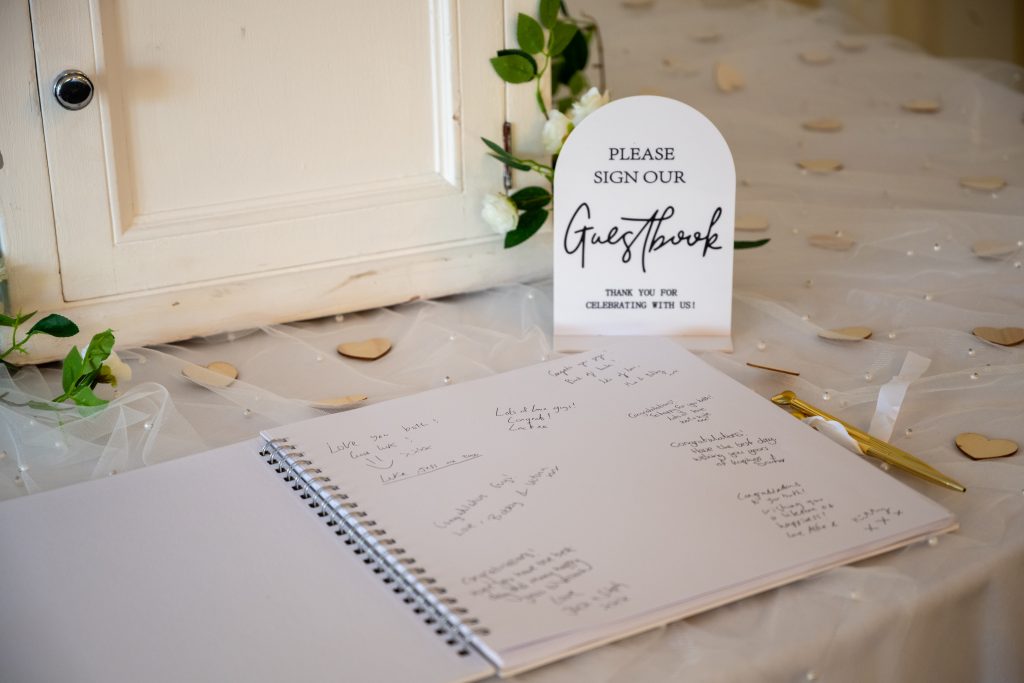
What Actually Goes on the Invitation
There’s an established set of information every wedding invitation should carry. You don’t need every item, but they cover the questions guests will otherwise be emailing you about.
The essentials:
- The names of the couple getting married.
- Who is hosting the wedding (traditionally the bride’s parents; today more commonly a variation reflecting who’s actually paying, or simply the couple themselves).
- The date, the day of the week, and the year.
- The time the ceremony starts.
- The name and address of the venue.
- The RSVP deadline and how to respond.
- Any dress code.
Useful additions (often on a separate details card or website):
- Directions and postcode for the venue (particularly important for rural Sussex venues — put the actual postcode, not just the town).
- Nearby accommodation recommendations, with a note that on-site rooms are limited and best-loved to the closest guests.
- Any transport arrangements — a coach from London, taxi companies who know the venue, the nearest station.
- Information about the running order of the day, particularly if anything is unusual (an early morning wedding, a Friday, a mid-week).
- Gift list details, if you’re having one (many couples now do a “honeymoon fund” or “no gifts, but donations to X welcome” line here).
- Dietary requirements ask, on the RSVP.
- A hashtag or shared photo album, if you’re using one.
- A note if children are or aren’t invited.
Most couples now include a wedding website URL that carries all of the above in more depth. It’s cleaner, easier to update, and stops the invitation being a fold-out map. If you’d like a template of what to include for a Selden Barns wedding — travel, accommodation, the wet weather plan, the day’s rhythm — we’ve got a starting list we’re happy to share with couples who’ve booked.
The RSVP Deadline
The single most important detail on the invitation is your RSVP-by date.
Set the RSVP deadline: 4 to 6 weeks before the wedding.
Any later and you can’t finalise numbers with the venue and caterer in time. Any earlier and guests forget to reply on time regardless.
Four weeks is workable at a smaller wedding where you know most guests personally. Six weeks is safer at a larger wedding or one where a significant chunk of your list are people you don’t chase easily. Give yourself the buffer.
A few honest things about RSVPs:
- A meaningful percentage of guests will not RSVP by the deadline. Plan for a week of chasing.
- Digital RSVPs via a wedding website get you responses faster than paper cards mailed back to you, in our experience.
- Adding a phone number for questions or dietary requirements avoids a lot of back-and-forth.
- “Will you be joining us?” gets more responses than “Please indicate your attendance.”
Exceptions and Variations
Not every wedding follows the standard timeline. A few of the common variations.
Destination weddings. Guests need more warning to arrange flights, time off and accommodation. Save the dates 12+ months out, invitations 6+ months out, RSVP deadline 8-10 weeks before. For a Selden Barns wedding this typically doesn’t apply, but if you have overseas guests, treat them as a destination-wedding audience within your invite pool.
Weddings for London-based couples marrying in Sussex. Not quite a destination wedding, but your guests do need more warning than for a wedding round the corner. Send save the dates 10 months out, invitations 10-12 weeks out. Our full guide on planning a Sussex wedding from London has more on the practicalities.
Small or intimate weddings. For a wedding of 30 to 40 guests, the formal save-the-date step is often skipped in favour of a personal message, phone call or WhatsApp. Small weddings are usually already communicated at the “we’ve booked a date” stage.
Late-availability weddings. If your wedding is inside six months of booking, skip the save the dates. Send proper invitations as soon as possible with a compressed RSVP window (2-3 weeks). We’ve done plenty of late-availability weddings here and the truncated timeline works fine — most guests can drop everything for a wedding they care about at short notice.
Bank holiday weddings. People book bank holiday weekends 12+ months in advance. Get save the dates out at 12 months minimum, ideally 15.
Evening receptions. If you’re doing a separate ceremony elsewhere and an evening reception at Selden Barns, send an evening reception invitation rather than a full wedding invitation, but keep the same 8-to-12-weeks timing.
Digital or Paper?
Not really a question of etiquette any more. Both are entirely acceptable, and most couples now do a mix — a beautiful printed invitation for the guests they want to feel it in the post, and a simpler email invitation for the friends who’ll RSVP straight from their phone. Save the dates are increasingly digital across the board.
The main advantages of paper: it feels like a proper occasion, gets pinned to fridges, and lands in front of guests who don’t check email diligently. The main advantages of digital: it’s cheaper, faster, easier to update, and easier to track RSVPs.
If you’re doing paper invitations, add three to four weeks to your timing to allow for design, print and postage. What looks like “invite eight weeks out” starts as “start designing twelve weeks out.”
A Working Timeline for Most Sussex Weddings
Here’s how the timings stack up for a typical wedding at Selden Barns, working backwards from the date.
12 months out. Save the dates go out. Website (if you’re building one) is ready in basic form.
10-12 weeks out. Invitations are sent. Wedding website has full details, accommodation recommendations, travel information.
4-6 weeks out. RSVP deadline. Menus, dietary requirements and children’s-attendance information collected.
3-4 weeks out. Chase any missing RSVPs by phone or WhatsApp. Finalise numbers with the venue and caterer.
2 weeks out. Confirm final numbers, table plan and dietary list to the venue.
Wedding day. You’re already married in your head. Everything else is downhill from here.
Common Mistakes
The five most common timing errors we see, and how to avoid them.
Sending save the dates before you’ve booked the venue. Don’t. Not even to your parents. If the date slips, walking it back is horrible. Book the venue, then send.
Sending invitations too early. Six months out feels responsible; it isn’t. Guests file the invitation and forget it exists. Ten to twelve weeks is the sweet spot.
Setting the RSVP deadline too close to the wedding. Anything under four weeks doesn’t give you enough time to chase, finalise catering and settle the table plan.
Forgetting the details card. Sussex venues need directions and accommodation info. Assume your guests know nothing about the area and give them what they need.
Not building in chase time. You’ll spend the fortnight after the RSVP deadline politely reminding a handful of guests to reply. Factor that into your plans and don’t panic when it happens.
A Note on Booking the Venue First
Every timing above assumes the venue and date are locked. Which means the first thing to sort — before save the dates, before invitation design, before any of this — is the venue booking itself.
If you’re still at that stage, our date availability page shows what’s currently open. Or if you’d rather come and see the venue before you commit, our open evenings run through the year and private tours can be arranged whenever suits.
Book onto our next open evening →
Once the venue is booked, the rest of the timeline sorts itself. Save the dates go out, invitations follow, RSVPs come back, and before you know it you’re two weeks out with everything settled. The one bit of planning-anxiety this post can properly cure — take these timings, plot them in your calendar, and let the panic go.