
What to Wear to a Barn Wedding: A Guest’s Guide
If the invitation on your fridge says “barn wedding” and you’ve spent the last week wondering whether that’s the same as a normal wedding or something else again, this post is for you. The short answer is that a barn wedding sits somewhere between a hotel wedding and a garden party, with a few practical wrinkles that make the dress code slightly its own thing.
Get it right and you’ll be comfortable through a long day of ceremony, drinks on the lawn, dinner, speeches and dancing. Get it wrong and you’ll spend most of the wedding regretting your shoes.
Here’s what to wear to a barn wedding, from someone who’s watched thousands of guests get it right and wrong across an average British summer.
What a Barn Wedding Actually Is (For the Dress Code)
Worth being clear on this, because the phrase “barn wedding” covers a fair range.
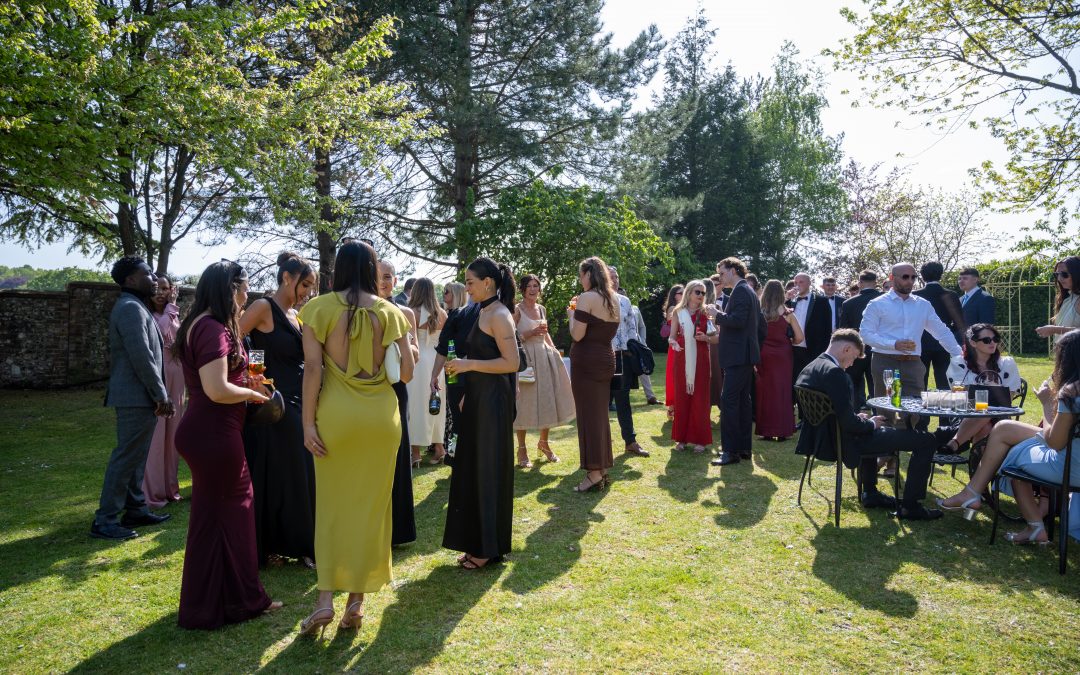
At the more traditional end, a barn wedding is essentially a country-house wedding held in a beautiful converted farm building. The dress code is closer to a formal wedding than a garden party — proper suits, cocktail dresses, hats if you fancy one. At the more relaxed end, a barn wedding is a countryside celebration where the couple have deliberately picked something less formal, with grass under your feet and a general instruction to show up looking lovely without over-thinking it.
The invitation is the best guide. If it says “black tie” the dress code is exactly what it says. If it says “smart country,” “informal,” or gives no dress code at all, you’re in the middle ground — smart but not stiff, dressed up but with practical concessions to the reality of being outside for parts of the day.
If in doubt, err slightly more formal than the setting suggests. A well-cut suit or a proper dress at a relaxed wedding never looks wrong. Turning up in jeans to a smart barn wedding does.
The Single Most Important Decision: Footwear
If you take one thing away from this post, make it this. Your shoes are the difference between a great day and a miserable one.
A barn wedding almost always involves grass. Even if the ceremony is inside, there’ll be drinks on a lawn, photographs on the grounds, or a walk between the ceremony and the reception across some kind of outdoor terrain. Stiletto heels and grass do not mix. What starts as a lovely outfit at 2pm becomes a series of near-falls, sinking, aerating the lawn and eventually giving up entirely by 6pm and going barefoot.
The solutions, in order of practicality:
Block heels. The most forgiving option. Elegant, stable, don’t sink into grass, and comfortable to stand in for a long ceremony. If you’re wearing a dress and want height, this is what you want.
Wedges. Similar advantages to block heels, with slightly more forgiveness on softer ground.
Flats. Utterly acceptable at any barn wedding. Ballet flats, brogues, loafers, elegant sandals — all fine. Anyone who tells you flats are underdressed hasn’t been to a barn wedding in the rain.
Heel protectors. Small clear plastic sleeves that fit over the heel and stop it sinking. Available online cheaply, sensational at their one job. Wear the heels you love and protect them with these.
Bring a spare pair. The move most seasoned wedding guests use. Heels for the ceremony and photos, flats or sandals for the dance floor. Nobody looks at your feet by 9pm.
Men have it slightly easier — proper leather shoes cope with grass better than heels. Suede is worth thinking twice about if the forecast is uncertain. Avoid brand-new shoes you haven’t worn in; nothing kills a wedding day faster than a blister at 3pm.
Fabrics and What to Reach For
Barn weddings run through the year and the fabric that works in July won’t work in December. A few rules that hold across seasons.
Natural fabrics breathe better. Linen, cotton, wool, silk — all handle the temperature shifts of a British wedding day more gracefully than synthetics. A polyester suit in an August barn is a sauna; a linen or lightweight wool one is fine.
Structured beats floppy. A barn wedding involves standing, walking, sitting on garden chairs and dancing. A well-structured dress or suit holds its shape through all of that. Flimsy fabrics wilt as the day goes on.
Wrinkle-resistant matters. You’ll be in the outfit for 10-12 hours. Something that looks pristine at 2pm but a bag of crisps by 7pm is a poor choice.
Pockets are always welcome. Especially for women. A dress or jumpsuit with pockets earns its place at a barn wedding.
Layers, Layers, Layers
The single biggest mistake barn-wedding guests make is not planning for the temperature swing.
A British summer’s day at a country venue can hit 27 degrees at 2pm and drop to 14 by 10pm. A spring or autumn wedding can be even more extreme, with warm sun during the ceremony and a genuinely cold evening. Barns are warmer than the outside but often not by much once the doors are open onto the garden.
Bring a layer, and make it a nice one. A pashmina, a wrap, a jacket, a shawl, a light coat if it’s autumn or winter. Something that looks like part of the outfit rather than an afterthought. Nothing worse than having to borrow someone’s fleece for the entire evening because you didn’t plan.
For men — a proper waistcoat or jacket doubles as your evening layer. If you take the jacket off during the drinks reception, put it back on for the evening. A three-piece suit is your friend at a barn wedding for exactly this reason.
Season by Season
The rough guide for each part of the year.
Spring (March, April, May). Layers are essential. Weather is unpredictable — sunshine one hour, chilly wind the next. Dresses with sleeves or a proper wrap. Wool suit rather than linen. Closed-toe shoes rather than sandals. Bring an umbrella just in case.
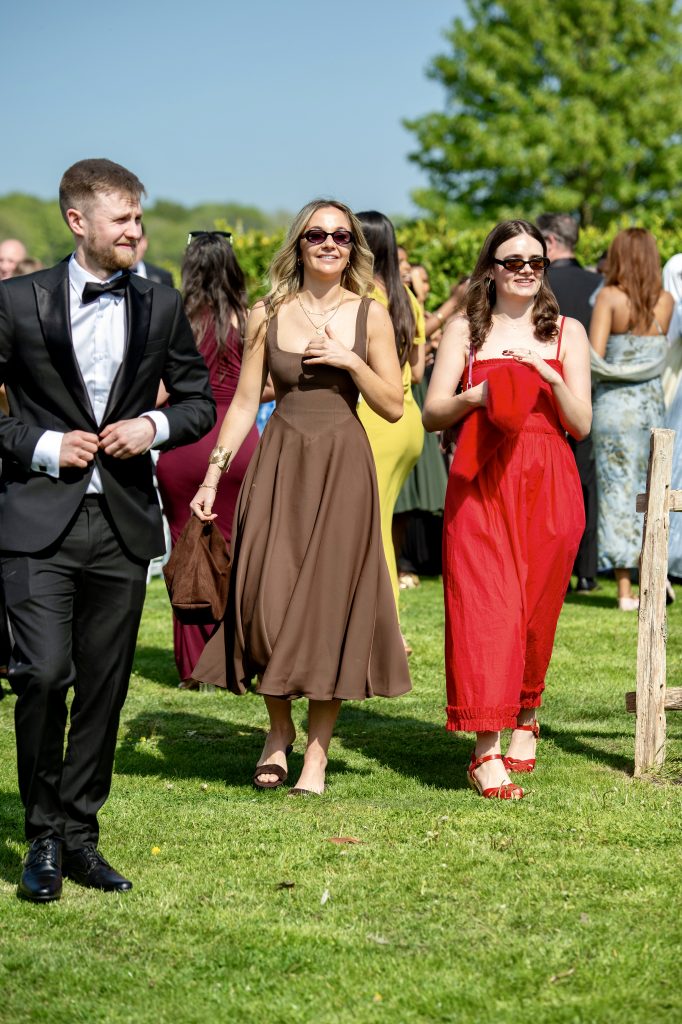
Summer (June, July, August). Breathable fabrics. Lighter colours for the ceremony (dark colours in the sun turn into ovens). Sunglasses for outdoor moments. A hat if you fancy one. Even in a heatwave, bring a light layer for the evening — a summer barn cools down surprisingly fast once the sun drops.
Autumn (September, October, November). Some of the loveliest weddings but the trickiest for outfits. Warmish afternoon, cold evening. Layered dress with tights, or a proper jacket. Ankle boots or block heels rather than sandals. A wrap or scarf. October weddings especially benefit from a proper coat you can throw on for outdoor photographs.
Winter (December, January, February). Full winter dressing. A proper coat, real shoes (nothing open), tights or trousers, a warm wrap for the ceremony if it’s outside or in the pergola. Deep colours suit winter weddings. Sparkle is welcome. Bring an evening bag with room for gloves and a scarf.
What to Avoid, Regardless of Season
The classics that turn up at every barn wedding and shouldn’t.
White. Still not the guest’s colour. Ivory, cream, pale blush — all off-limits at almost any wedding. Even a mostly-white pattern raises eyebrows. Save it.
Anything you’d wear to a beach party. Barn weddings are dressier than they look. Denim, shorts, flip-flops, bright novelty prints — all out of place.
Stilettos, if there’s any grass. As above. Don’t do this to yourself.
A brand-new outfit you haven’t tried sitting down in. The dress that looks perfect in the mirror can turn out to ride up when you sit for the ceremony, or ripple oddly when you stand. Wear it around the house for an hour before the day. Sit in it. Walk in it. Test it.
A hat that blocks the view behind you. Wide-brimmed hats are lovely; a hat brim so wide it blocks the aisle for the row behind you isn’t. Save the biggest ones for the drinks reception rather than wearing them through the ceremony.
Anything that makes noise. Skirts with underlayers that rustle, shoes that click loudly on stone, bags with jangling straps. A barn ceremony is quiet. You’ll notice everything.
For the Men
Underdressed grooms happen at every barn wedding and it’s usually a small handful of avoidable mistakes.
A proper suit — two or three piece — is the safest choice unless the invitation says otherwise. Navy, mid-grey and charcoal are the safest colours for most weddings. A patterned tie or pocket square lets you have some personality without looking like you’re trying to compete with the couple.
Waistcoats are your friend. They keep you looking dressed even when the jacket comes off during the drinks reception. They also cover any shirt that starts wrinkling as the day goes on.
Proper leather shoes, polished. Brogues, oxfords or a smart derby. Avoid: trainers, sandals, boots, suede in questionable weather.
Take the jacket off during the drinks reception if it’s hot, put it back on for the ceremony, the meal, the speeches and the first dance. Come back on the dance floor when the room is really moving.
A pocket square is a very good use of ten pounds if you want to add colour without changing the whole outfit.
For the Women
A few extras beyond the shoes and fabrics above.
Dresses that skim rather than cling. More flattering after a heavy dinner. Kinder to the day-long sit-stand-dance rhythm of a wedding.
Jumpsuits work beautifully at barn weddings. They read as smart, they’re comfortable, they photograph well, and they don’t have the “sitting on grass” problem a delicate skirt has.
Length that clears the ground. Anything you’d have to lift walking across a lawn is a hazard. Midi and knee-length are safer than floor-length for most guests.
Bags stay small. A clutch or a small crossbody. You’ll be moving through spaces, holding a drink, and hugging a lot of people. Large tote bags don’t work.
Jewellery you can dance in. Nothing that clangs, catches on hair, or comes loose. Test it before you go.
Fascinators over full hats if you’re likely to be inside for the ceremony. Full hats are lovely outside; slightly awkward under a low barn beam.
A Small Practical Bag of Things That Save the Day
Whether you’re a bloke or otherwise, a few tiny items in a bag or a pocket cover almost anything a barn wedding throws at you.
- Blister plasters (new shoes plus dancing)
- Painkillers, antihistamines
- Tissues (they always come out during the vows)
- A small mirror
- A safety pin or two
- Deodorant wipes for the heat
- Setting spray for hair in humid barns
- A charger cable, because you’ll want photos
None of this weighs anything. Any one of them can rescue a moment.
When to Change (Or Not)
Some guests bring a second outfit for the evening — flats, a lighter dress, a switched-out shirt. Others wear one thing through the whole day. Both work.
The most common change is footwear. Ceremony and photos in the smart shoes, then a switch to flats or clean trainers when the dance floor opens. A small bag under your chair holds the swap.
For a proper full change, most barn venues will have somewhere you can freshen up — a bathroom, a coat room, a corner of the accommodation if you’re staying over. Nobody minds if you disappear for ten minutes at 8pm and return in a slightly lighter outfit.
A Note on Weather
However you dress, check the forecast the day before. British weather can go either way. If it’s on for rain, bring a compact umbrella that fits in your bag and shoes that don’t hate water. If it’s on for heat, water is your friend from the moment you arrive.
The couples we host at Selden Barns plan properly for both — our full post on the wet weather plan explains how a good barn venue handles it. As a guest, all you need to do is not be the one caught out.
If This Has You Picturing Your Own Barn Wedding
Attending a beautiful wedding is one of the more common paths to booking your own. If reading this has made you think about how a barn wedding might look for you, Selden Barns is an exclusive-use barn wedding venue in West Sussex with three ceremony spaces, on-site accommodation, and everything the day needs to feel exactly right.
Book onto our next open evening →
For now, wear something you love, bring a layer, wear the right shoes, and enjoy the day. Barn weddings are among the loveliest weddings in the country — turn up prepared and yours will be one to remember.