
Winter Barn Weddings in Sussex: The Case for December to February
Ask most engaged couples when they’d like to get married and you’ll get roughly the same answer. May, June, July, August or September. The peak-summer default is so deeply set that a lot of couples don’t consider anything else until they realise their preferred venues are booked out eighteen months in advance and their preferred date is going to cost them a small mortgage.
The couples who look beyond that default and end up choosing December, January or February are, almost universally, quietly pleased with themselves afterwards. Winter barn weddings are not a compromise. They’re a properly different kind of wedding — atmospheric, intimate, better value, and often the one guests remember most vividly from a year of invitations.
Selden Barns has hosted winter weddings across every month from November through February, and this is the honest case for why more couples should be looking at them.
The Atmospheric Case
Start with the mood, because it’s the reason the couples who choose winter tend to fall in love with the idea.
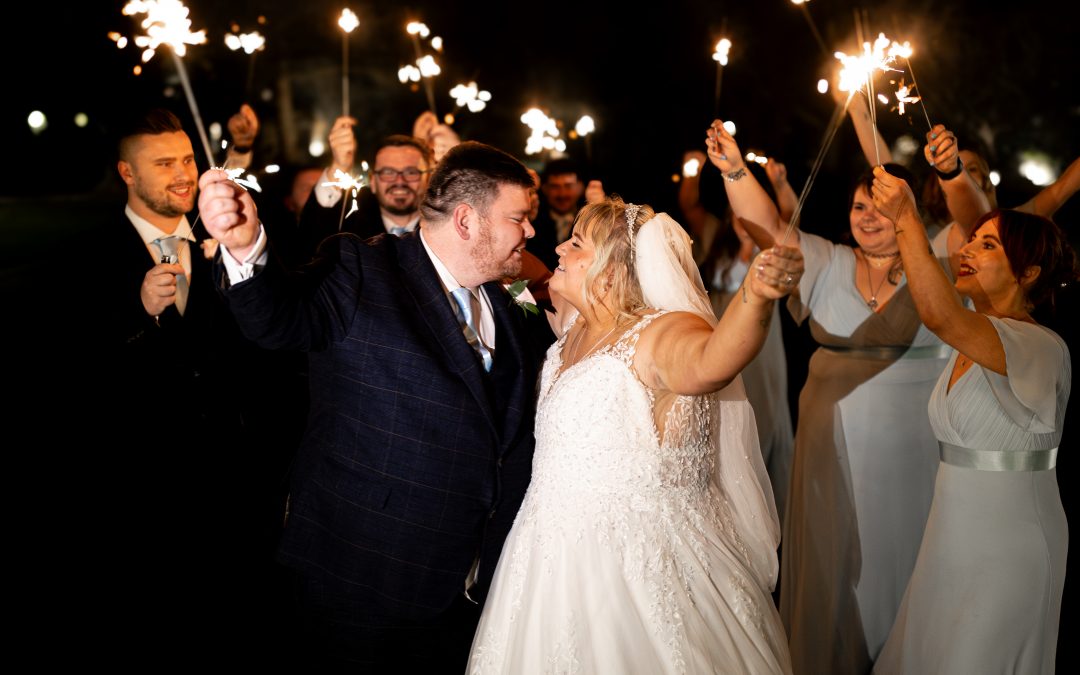
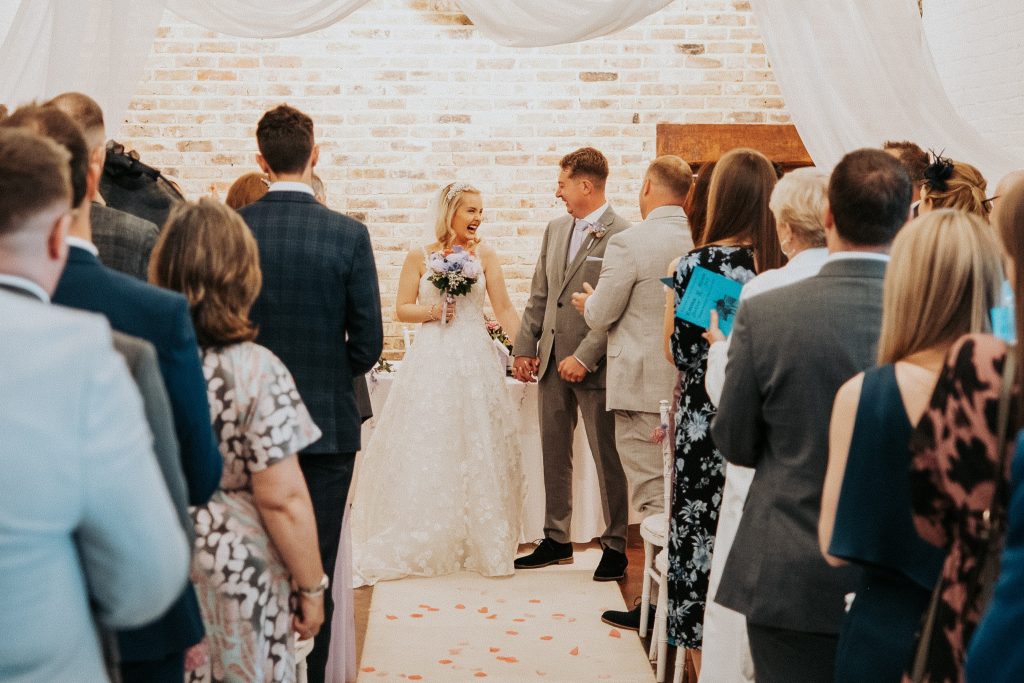
A summer wedding is bright, open and outdoors — the doors thrown back, guests on the lawn, evening drinks in shirt sleeves until 10pm. Lovely, and rightly popular. A winter wedding at a barn is a different creature entirely. The doors closed. Candles everywhere — properly everywhere, not two on the mantelpiece. Fairy lights strung through the beams. A fire lit. Guests wrapped in layers, holding warm drinks. The countryside outside is quiet and empty in a way it never is in June. The whole scene has a hushed, held-close quality that a summer wedding can’t quite manage.
The photography in this setting is extraordinary. Winter light in Sussex is soft, gentle, and lower in the sky — the golden hour stretches. The candlelit interior shots read as cinematic rather than pretty. Snow is rare in West Sussex but frost is common, and a wedding morning with the grounds crisp and white is a photograph you’ll frame.
The mood at a winter wedding is quieter than a summer one, in a good way. Guests aren’t scattered across a lawn — they’re gathered together in a warm room. Conversations run deeper. The bar feels busier because everyone’s inside. Dancing tends to start earlier because there’s less pull to be outside. The whole evening has a proper interior-warmth to it.
Why Winter Weddings Get Overlooked
Worth being honest about the reasons couples talk themselves out of a winter date.
The weather assumption. Most couples assume winter means cold, wet, miserable. In reality, a British winter is often a series of crisp bright days, dry cold, and beautiful low light — with the occasional stormy stretch. December and January are dryer than August, statistically speaking. February has some of the most reliable dry weather of the year. The reality of a winter wedding day is much less bleak than the mental picture.
The Christmas conflict. December weddings have to work around guests’ Christmas commitments, which is real but not as limiting as it sounds. Mid-December weddings (before the 20th) work well. Late-December weddings between Christmas and New Year have their own magic. Early January weddings work if given enough notice.
The dress issue. Couples worry the bride will freeze. A well-planned winter wedding dress is warm — proper fabrics, sleeves, layered underneath, a stunning coat or wrap for outdoor moments. Or a completely different silhouette, cut for winter. The photographs of winter brides in real winter dresses are often more striking than the summer equivalents.
The “everyone else is doing summer” pull. Purely social. Nothing to do with whether the wedding will be good.
The bit couples never quite think about: a winter wedding is often the wedding your guests remember most. They’ve been to twelve summer weddings this year. Yours is the one they’ll bring up in five years’ time.
The Practical Case
Beyond the atmospheric argument, there are properly practical reasons to look at winter dates.
Value. The single biggest one. Peak-season Saturdays in June through September are the most expensive dates on the calendar. A winter Saturday, at the same venue with the same suppliers, is often noticeably cheaper. A winter midweek date is dramatically cheaper again. The saving can be redirected into things that genuinely improve the day — better photographer, better food, better band.
Availability. Winter dates book far later in the cycle than summer ones. If you’re planning a wedding at short notice, a winter date is one of the few ways to get first-choice suppliers who’d otherwise be booked out. Your dream photographer with a two-year waiting list for July Saturdays? Available in February.
Weather predictability. Not a joke. Summer in the UK is now genuinely unpredictable — heatwaves, thunderstorms, unseasonably cold snaps. Winter is easier to plan around. You know it’ll be cold. You dress and heat for it. The venue’s three ceremony spaces mean the indoor barn is the natural choice; nobody’s making a call at 9am about outdoor vs indoor.
Kinder to older guests. August heat is genuinely difficult for elderly relatives. A well-heated indoor winter wedding is far more comfortable for the grandmother in her eighties than a 28-degree August afternoon on a lawn.
More time to plan. Winter dates book later, which means shorter engagements. Not for every couple, but for those who don’t want an 18-month planning marathon, a winter wedding six months out is properly achievable.
No competing weddings all summer. Your close friends aren’t juggling your wedding against three others in the same month. Attendance is often better because guests aren’t wedding-fatigued.
Christmas Weddings, Specifically
Weddings between mid-December and just before Christmas have their own particular magic.
The whole country is already in celebration mode. Everyone’s decorated their homes. Christmas trees are up, twinkling lights are everywhere, and the barn takes on an entirely different character with the addition of a proper Christmas tree in the corner. Food menus lean into winter comfort — game, root vegetables, spiced desserts, mulled wine at the drinks reception. Music leans into warmth. The whole day feels like an extension of the season rather than an event in isolation.
Christmas-week guests are often more relaxed too. They’ve usually taken time off work already. The pace of the day slows in a lovely way. And Christmas Day itself the following week means the honeymoon can quietly become a family Christmas at home before flying off in January — genuinely lovely if that’s your style.
The one thing to be careful of: mid-December weddings need save-the-dates out early (10+ months) so guests can plan their Christmas commitments around your date rather than the other way around.
New Year and Early January Weddings
New Year’s Eve weddings are their own particular category. Slightly more expensive than a regular winter date (the calendar being what it is), but a wedding that ends with midnight fireworks and a champagne toast has a specific magic that no other date can match. Not every couple wants to marry on the same night the whole country is out celebrating — but the ones who do consistently describe it as one of the loveliest days of their lives.
Early January weddings — the first two or three weekends — are among the quietest, most beautifully-priced dates on the calendar. Guests are usually available, the countryside is at its quietest, and the mood is one of fresh-start reflection that pairs well with a wedding. Photographers, florists, bands — almost all available at short notice for early January.
February: The Underrated Month
February often gets skipped over entirely, and it shouldn’t. It’s the last proper winter month before the shoulder season begins, which means:
Snowdrops appearing across the grounds in mid to late February. The sky often crisp and bright. Availability wide open. Suppliers relaxed and enthusiastic. Pricing at its most reasonable. Genuinely lovely light for photography.
Late-February weddings sit in an interesting spot — winter enough to lean into candlelight, fires and warmth, but with the first hints of spring on the horizon. It’s arguably the best winter wedding month in the whole year, and almost nobody’s looking at it.
How Warmth Actually Works in a Barn
The single practical concern every couple raises about a winter wedding is the same. Will the barn be cold?
The honest answer is that a barn with proper heating is as warm as any other venue. At Selden Barns the main barn has proper heating that runs through the whole day, plus wood-burning fires that add both heat and atmosphere. By the time guests arrive, the room is a comfortable temperature. By the time the dance floor is going, guests are shedding layers.
The bit to plan for is the ceremony transitions — the walk from the car to the entrance, the outdoor photographs, the moments guests step out for air. That’s what warm drinks, blankets on chair backs, and a proper cloakroom for coats handle. Guests know to dress for the outdoor bits and de-layer for the indoor ones.
We provide woollen blankets over the chairs at winter ceremonies. Warm drinks — mulled wine, hot chocolate, spiced cider — flow from the moment guests arrive. Outdoor spaces get fire pits and heaters if needed. And the barn itself is properly warm through the whole day.
If you’re worried about the older guests, plan a shorter time between arrival and ceremony, and prioritise transporting them straight to the warm room rather than lingering outside.
What Winter Guests Wear
Guests dressed for a British summer wedding often struggle in winter without much thought — the ballet flats and thin dress that worked in June won’t work in January.
The couples who send out a small guidance note with the invitation — “we recommend warm layers for the ceremony, proper shoes, and something to change into for the evening” — tend to have happier guests. Nothing formal. Just a nod to the fact that this is a winter date.
Practical bits guests appreciate: a proper cloakroom for coats. Blankets available in the ceremony space. A quiet spot near a fire to warm up. And, if the ceremony is in the indoor barn (which most winter ceremonies are), guests can wear what they’d normally wear to an indoor venue without needing full-on winter layers underneath.
Photography in Winter
The one thing winter has over every other season is the light. Winter sun sits low in the sky, casts long shadows, and turns golden hour into a genuinely magical part of the day. Photographers who work through winter often describe it as their favourite season for wedding photography — the light does half the work.
The trade-off is that daylight is shorter. December sundown is around 4pm, January around 4.30pm, February around 5.15pm. If you want outdoor photographs in daylight, the ceremony needs to be scheduled early — 1pm or 2pm at the latest. After that, the photography moves indoors and leans on candlelight, which is its own beautiful thing.
Winter wedding photographs have a specific quality — moody, cinematic, romantic. They photograph unlike any other season and they age beautifully.
The Half-Price 2027 Offer
Worth mentioning specifically because it applies to exactly this window.
We’ve opened up a limited number of dates between January and May 2027 with half-price venue hire. If you’re considering a winter or early-spring 2027 date, that offer stacks on top of everything above — you get all the atmospheric and practical benefits of a winter wedding, at half the venue hire cost. It’s the best-value wedding decision we currently offer.
Combine a January or February 2027 midweek date with the offer and you’re stacking three savings — off-peak, midweek, and half-price hire. Weddings booked this way typically come in at a fraction of a peak-summer Saturday, without any compromise on the day itself.
Winter Barn Weddings at Selden Barns
The main barn handles a winter wedding as well as it handles a summer one — proper heating, wood-burning fires, warm interiors, room for candles and lights throughout the space. The indoor ceremony barn is set up for winter ceremonies without any adjustment. The on-site cottages mean guests can stay overnight rather than driving home in the dark, and the morning-after coffee round the fire is one of the loveliest parts of a winter wedding weekend.
We host winter weddings the same way we host summer ones — one at a time, exclusive use of the venue, full attention from the coordinator, everything designed around the couple. The season doesn’t change how the wedding runs. It changes the mood and the light.
Come and See It in Winter
The single best way to picture a winter wedding here is to visit in winter. The barn with the fire lit, the countryside quiet outside, the light through the windows in the middle of January — you can’t imagine it properly from a summer visit.
Book onto our next open evening →
Enquire about winter dates and the half-price 2027 offer →
A winter wedding isn’t the compromise most couples assume. Done properly, in a venue built for it, it’s often the loveliest wedding you could have. The dates are open. The pricing is kinder. The atmosphere is unmatched. And most of the couples who choose winter tell us afterwards it was one of the best decisions they made.