
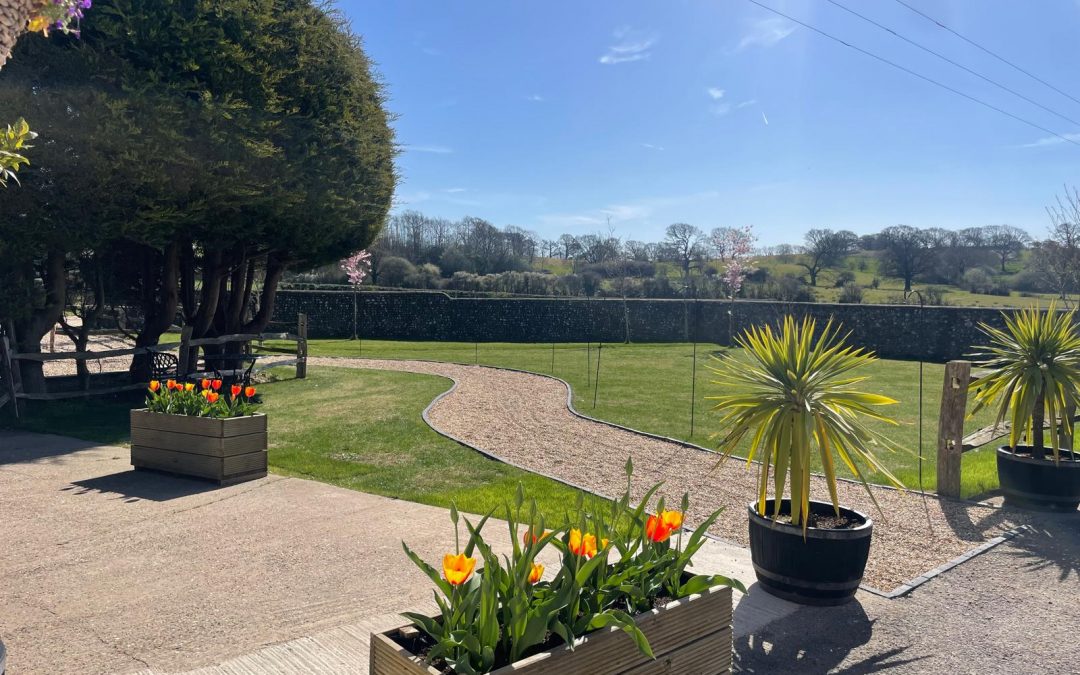
How to Choose a Wedding Venue: A Sussex Couple’s Guide
Choosing your wedding venue is the biggest decision you’ll make in the whole of your planning, and it’s often the first proper one. Everything else — the date, the guest list, the suppliers, the shape of the day — flows out from it. The venue is the day, in a lot of ways. And most couples start the search knowing very little about how to actually do it well.
There’s no shortage of advice online, but most of it defaults to variations of “trust your gut” and “you’ll know when you know” — which is true up to a point and useless before it. What follows is a properly practical guide to choosing a wedding venue in Sussex: what to think about before you start looking, what to prioritise, what to compromise on, the red flags worth spotting early, and the things quietly worth paying more for. Written by people who watch this decision happen every week.
Start With What You Actually Want, Not What You Think You Should Want
Before you look at a single venue website, sit down together for an hour and be honest about the day you’re picturing. Ignore Instagram for a moment. Ignore what your parents’ generation did. Ignore what a wedding is “supposed” to look like. Get to the version of it you actually want.
Some questions worth answering out loud:
Is this a big wedding or a small one? Rough number of guests?
Do you want it to feel formal, or relaxed, or somewhere in the middle?
Would you rather it feel more like a country house, a barn, a hotel, a garden party, or something else again?
Do you want the ceremony and reception in the same place, or are you comfortable moving between two venues?
Are you more excited about the ceremony or the party at the end? (This is a surprisingly useful question — it tells you where the venue needs to shine.)
Is this a one-day event or a two-day one? Do you want your closest people to stay over?
How much time do you actually want to spend planning this? If very little, you need a venue whose team does more of the work.
You’ll know when you’ve had the honest version of this conversation because the shortlist gets smaller almost immediately. Half the venues you’d been looking at drop off the list not because they’re bad but because they aren’t for the day you actually want.
Get the Basics of the Search Sorted First
Once you know the day you’re picturing, three practical filters cut a Sussex venue search down from hundreds to a manageable number.
Rough budget. Not the final one — the rough one. Are you a £15k wedding or a £30k wedding? Everything above or below the range you’re honestly working with should come off the list, and there’s no point pretending otherwise. Most Sussex venues sit somewhere between “reachable for real people” and “eye-watering.” Know which end of that you’re working within.
Guest number. Give yourself a range, not a single figure, because the actual number will fluctuate. Anywhere between 40 and 60. Between 80 and 120. The venue’s minimum and maximum capacity have to include your realistic range, ideally with a bit of margin.
Geography. Some couples know exactly where they want to be married and can filter to a 20-minute radius. Others are more open. Be honest about what “near enough” means for your guest list and travel plans, and don’t get sold on a venue two hours from anyone.
That trio will usually take you from a longlist of forty or fifty venues down to a shortlist of ten or fifteen. From there, the visits do the rest of the work.
What to Prioritise (Even If It Costs More)
Not every feature matters equally. A few are worth spending extra on, and a few are worth compromising on. Here’s the honest breakdown of what genuinely affects your wedding day.
Exclusive use. The single feature we’d tell any Sussex couple to prioritise. Having the whole venue to yourselves for the day, with no other wedding next door and no shared bar with hotel residents, changes the entire atmosphere. It’s the difference between the venue being a stage for your day and the venue being a backdrop for someone else’s business. We’ve written more on why exclusive use matters if you want the fuller case.
A real wet weather plan. This is Britain. Your venue must have a proper backup for the ceremony and the drinks reception that isn’t a rushed marquee or an apologetic conservatory. Look for venues with either multiple licensed ceremony spaces or one indoor space that is genuinely beautiful in its own right. Our wet weather plan post explains what a good one looks like.
One barn, one room, one flow. Most weddings still get split across multiple rooms — ceremony here, drinks there, dinner in a third, dancing in a fourth — and it’s exhausting for guests and dilutes the atmosphere. Venues that do dining, dancing and the bar in one space hold the party together in a way multi-room venues can’t quite manage.
The people running it. The venue coordinator matters more than any physical feature. You’ll spend eighteen months exchanging emails and phone calls with this person and they’ll run your wedding day when it comes. Pay attention on your visit to how the team makes you feel. A calm, warm, straightforward coordinator is worth their weight in the entire venue.
On-site accommodation. For a lot of weddings this is the difference between a good day and a great weekend. Somewhere for the bridal party to stay the night before, somewhere for grandparents to retreat to during dinner, somewhere everyone gathers for coffee the next morning. Venues that offer on-site cottages or rooms transform the shape of the celebration.
What to Compromise On
Just as important as knowing what to prioritise is knowing what to let go of. Couples routinely walk away from the right venue because it fails a test that didn’t actually matter.
The exact date. If your heart is set on a specific Saturday and the venue you love is booked, look at the day before or after. Look at a midweek. Look at the same date the following year. The venue will affect your day more than the date will, and the good venues book eighteen months out — flexibility on the calendar is one of your most useful negotiating tools.
The absolute peak season. A May-to-September Saturday is the most-booked slot on the calendar and priced accordingly. A shoulder-season date (April, October) or an off-peak one (November through March) can save you meaningful money and often gives you a better version of the same venue.
Perfection in every space. A venue with a beautiful ceremony space, a beautiful reception space, but a slightly odd bar is not a compromised venue. It’s a real one. Every venue has a corner that isn’t its best. You’re paying for the parts of the day guests actually spend time in.
Precise decor to match your Pinterest board. A good venue is a canvas. Flowers, candles and lighting will transform it far more than couples first believe. Don’t discard a beautiful venue because its walls are the wrong shade for your mood board.
Absolute proximity to home. A wedding an hour from where you live is usually just as easy to plan as one in the next village, thanks to email and video calls. Sometimes the venue that’s a slightly longer drive is significantly better than the one round the corner.
Red Flags to Watch For
The venues that go wrong tend to trip couples up in the same handful of ways. Learn the signs early.
Vague pricing. Any venue whose website hides its pricing entirely, or lists “prices on request” without a clear structure, is doing so for a reason. Transparent pricing is a sign of a venue that respects your ability to budget. Look for a proper published breakdown — day, midweek, off-peak — like our affordable venue page shows.
Aggressive supplier restrictions. Some venues require you to use only their in-house or preferred suppliers, at prices that aren’t competitive. A venue that lets you bring your own photographer, florist, band, and even in some cases your own caterer, is a venue confident in what it does. One that locks you in has something to hide about the mark-up.
No wet weather plan you actually believe in. If the answer to “what happens if it rains” is “we’ll pop a gazebo up on the lawn,” that’s not a plan.
Multiple weddings on the same day or weekend. Ask directly. Some venues run back-to-back weddings on the same day, or have another wedding party using the shared spaces the following morning while you’re eating breakfast. This drastically changes the experience.
Slow or evasive communication in the enquiry phase. How a venue talks to you when they’re trying to earn your booking is how they’ll talk to you afterwards. If the answers are slow, vague or defensive now, they’ll be slower, vaguer and more defensive when you’re a paying customer.
Contract loaded with penalties and extras. Read the contract properly before signing. Look for corkage fees, service charges, minimum spends, extra time charges, and cancellation terms that seem harsh. The contract tells you a lot about how the venue thinks about the relationship.
Reviews that mention the venue team causing stress. Isolated bad reviews happen everywhere. But when multiple couples mention feeling talked down to, argued with, or ignored by the team, believe them.
The Things Quietly Worth Paying More For
Not everything cheaper is a saving, and not everything more expensive is an indulgence. A few venue features are consistently underpriced by couples looking at spreadsheets, and worth extending the budget for.
Exclusive use, again. The single biggest predictor of how much you’ll enjoy the day.
A properly experienced coordinator included in the price. A venue that includes a dedicated coordinator from booking to wedding day is saving you a five-figure wedding planner budget without you realising.
A ceremony that can happen at the venue. Not having to move guests between a register office and a reception venue is worth a lot.
Multiple ceremony spaces. Genuine flexibility on the day, particularly for the British weather.
On-site accommodation. Turns the wedding into a two-day event without any extra cost to you as a couple, and often at meaningfully lower cost to your guests than a nearby hotel.
A single-space reception. Weddings that don’t split rooms have better dance floors, better speeches and a better atmosphere.
How to Actually Shortlist and Visit
Once you have your rough filters, go through venue websites methodically. Save the ones that pass the basic tests. Aim for a shortlist of four or five venues to visit properly. More than that gets overwhelming and less than three doesn’t give you enough to compare.
Visit each one. Ideally at an open evening first — you get to see it in event mode, and you can bring family and friends without it being an intense private tour. If you’ve narrowed things down, ask for a private tour so you can spend real time in each space and ask the questions that matter.
Take notes at each visit. Photograph the same corners each time so you can compare like-for-like at home. Write down the immediate impressions before you leave the car park. You will forget details of venue three by the time you visit venue five, and the notes are the only thing that saves you.
Sit with your shortlist for at least a week before booking. Don’t decide in the car home from the visit, no matter how strong the feeling. Talk it through together, look at the pictures, re-read the notes. If the same one keeps rising to the top, you’ve probably found it.
The Sitting-With-It Test
The venue you should choose is the one you keep coming back to when you’re sitting with the shortlist a week later.
The wedding industry tries to sell you a coup de foudre, a moment of certainty, a “you just know.” That’s real for some couples. For most, the right venue reveals itself more quietly — through the honest conversations you have about it, through the way you keep picturing your ceremony in that particular space, through the fact that when you’re being critical about the shortlist, one keeps holding up better than the others.
Pay attention to that. It’s rarely wrong.
One Option Worth Considering
If, having read this, you’d like to see a venue that ticks each of those “prioritise” boxes — exclusive use, three ceremony spaces, a proper wet weather plan, dining and dancing in one barn, on-site accommodation for up to 30 guests, transparent pricing, and a coordinator included — Selden Barns is on the list.
We’re not the only good answer for a Sussex couple, and we’d never claim to be. But we’ve built the venue around exactly the things this post says to prioritise, and the couples who’ve been through this decision often tell us afterwards it’s why they landed here.
Book onto our next open evening →
Whichever venue you choose, take your time, prioritise the things that actually matter, and remember that the best day is built on the right decisions, not the flashiest ones. Good luck with the search.